AI Wabi-Sabi Interior Design

Upload your room photo and test a Wabi-Sabi direction with AI. Treat the result as a visual concept because architecture, scale, furniture, materials, and lighting can differ from the real room.

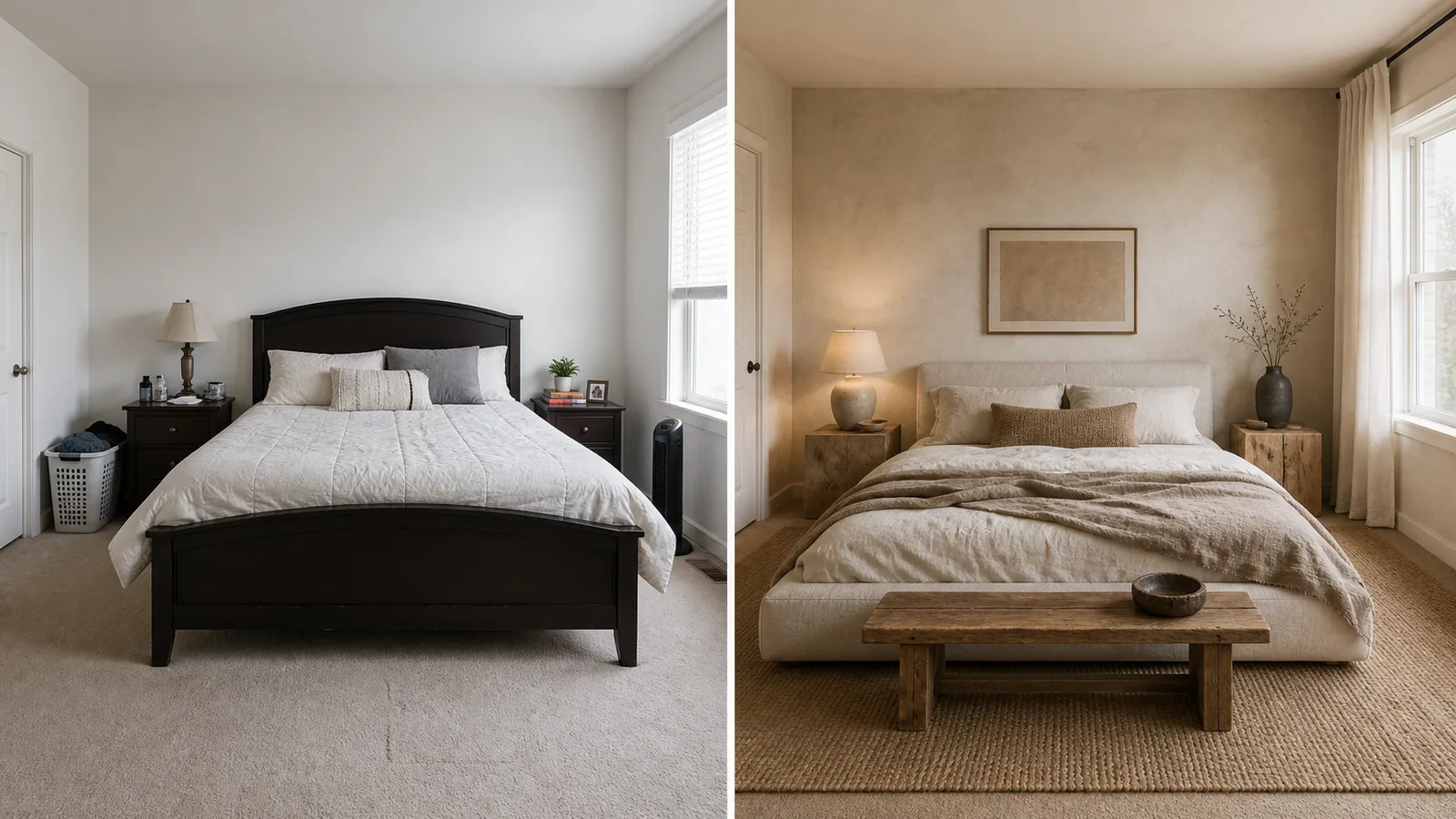
Before and after AI-generated Wabi-Sabi bedroom redesign with linen bedding, clay tones, raw wood, and handmade ceramics
AI-generated before / after
AI-generated RoomFlip preview: an ordinary bedroom softened into a Wabi-Sabi direction.

What Is Wabi-Sabi Interior Design?

Wabi-Sabi design values age, patina, handmade texture, and quiet imperfection. It is strongest when a room should feel personal, grounded, and slower rather than polished.

Wabi-Sabi is less symmetrical than Japandi and less furniture-led than Scandinavian design. The interest comes from texture, proportion, and negative space.

RoomFlip treats Wabi-Sabi as a visual decision tool. The goal is to preview whether your real room can carry this palette, material language, and lighting direction before you buy furniture, paint, tile, or fixtures.

Key Elements of Wabi-Sabi Design

Color Palette

Oatmeal, clay, mushroom, raw umber, weathered wood, soft black, and warm off-white.

Materials & Textures

Linen, limewash, raw wood, stone, handmade ceramic, woven fiber, matte plaster, imperfect metal.

Furniture & Silhouettes

Low beds, simple benches, softened edges, irregular ceramics, and fewer pieces with stronger material presence.

Lighting

Warm lamps, shaded sconces, low-contrast daylight, and no harsh white ceiling light.

Best Rooms

Bedroom, Bathroom, Reading Nook

How to Get a Better Wabi-Sabi AI Preview

Ask for clay walls, linen, raw wood, handmade ceramics, soft asymmetry, and sparse decor.

The button on this page opens RoomFlip with Wabi-Sabi preselected and a room-specific prompt already filled. Upload your own photo after that; the room type is used as guidance, not as a fake replacement for what the image actually shows.

When Wabi-Sabi Is the Wrong Fit

  • You need crisp symmetry for a formal listing photo.
  • The room is already very dark and lacks natural light.
  • You dislike visible texture, patina, or imperfect handmade details.

Related Interior Design Styles

See Your Room in Wabi-Sabi Style

Upload a room photo and select Wabi-Sabi (Wabi-Sabi) to create a visual redesign. Compare more than one generated direction and check each result against the original room.

Wabi-Sabi Interior Design FAQ

What does Wabi-Sabi mean in interior design?

It means designing around natural imperfection: weathered materials, handmade texture, asymmetry, and quiet negative space.

Which rooms suit Wabi-Sabi best?

Bedrooms, bathrooms, and small retreat spaces work best because the style is calm, tactile, and less focused on social performance.

Is Wabi-Sabi the same as Japandi?

No. Japandi is cleaner and more structured. Wabi-Sabi is rougher, quieter, and more accepting of age, patina, and irregularity.

Can RoomFlip generate a Wabi-Sabi room?

Yes. Choose Wabi-Sabi in RoomFlip and add a prompt for raw wood, linen, handmade ceramics, clay tones, and sparse styling.